AI agents for every conversation, on every channel.
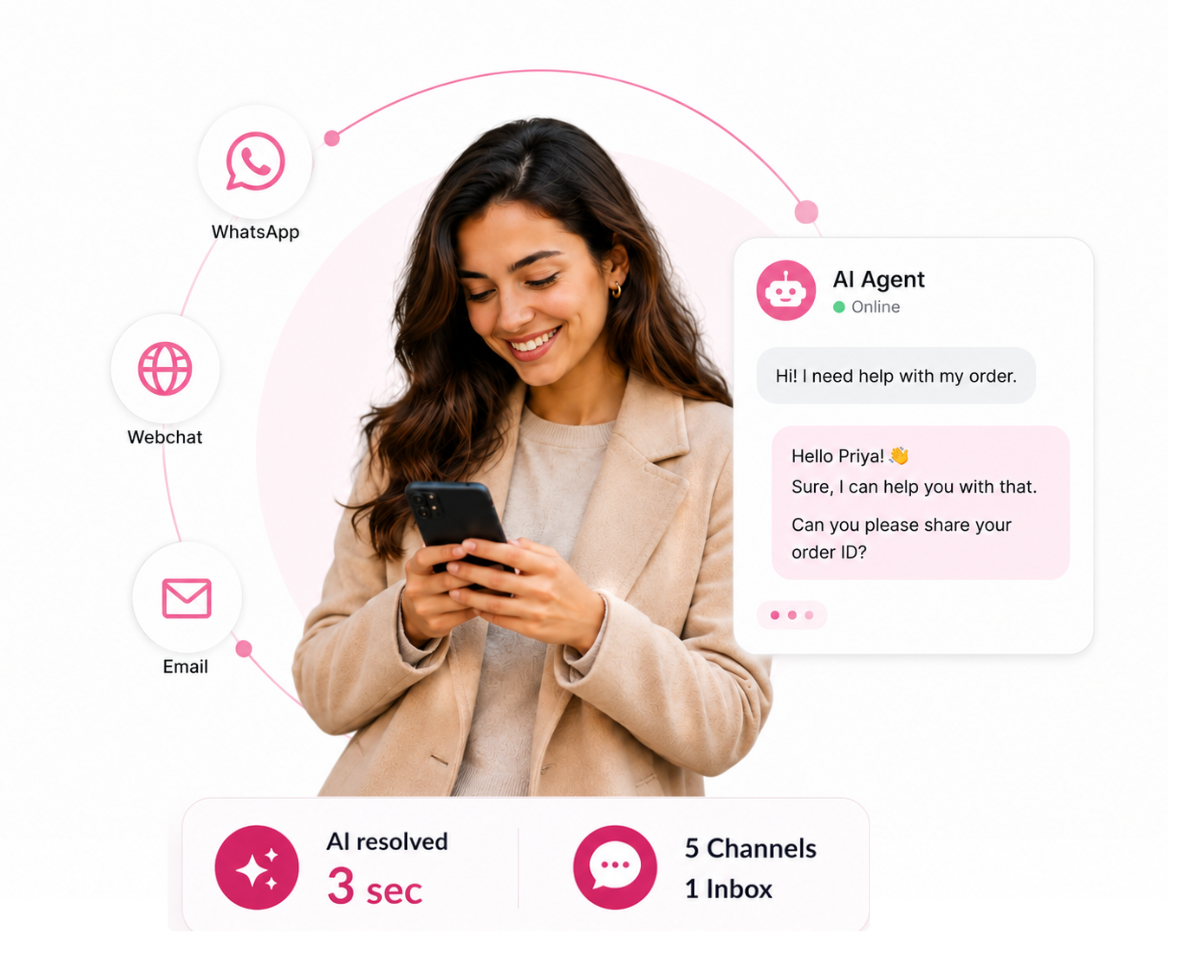
Mfluence puts a team of AI agents on WhatsApp, web, SMS, email, and voice — grounded in your knowledge, able to take real action, with your humans one tap away.
Reception, sales, support, and follow-up agents that handle conversations on their own — 24/7, on any channel, and smart enough to know when to bring in a human.
Grounded in your knowledge
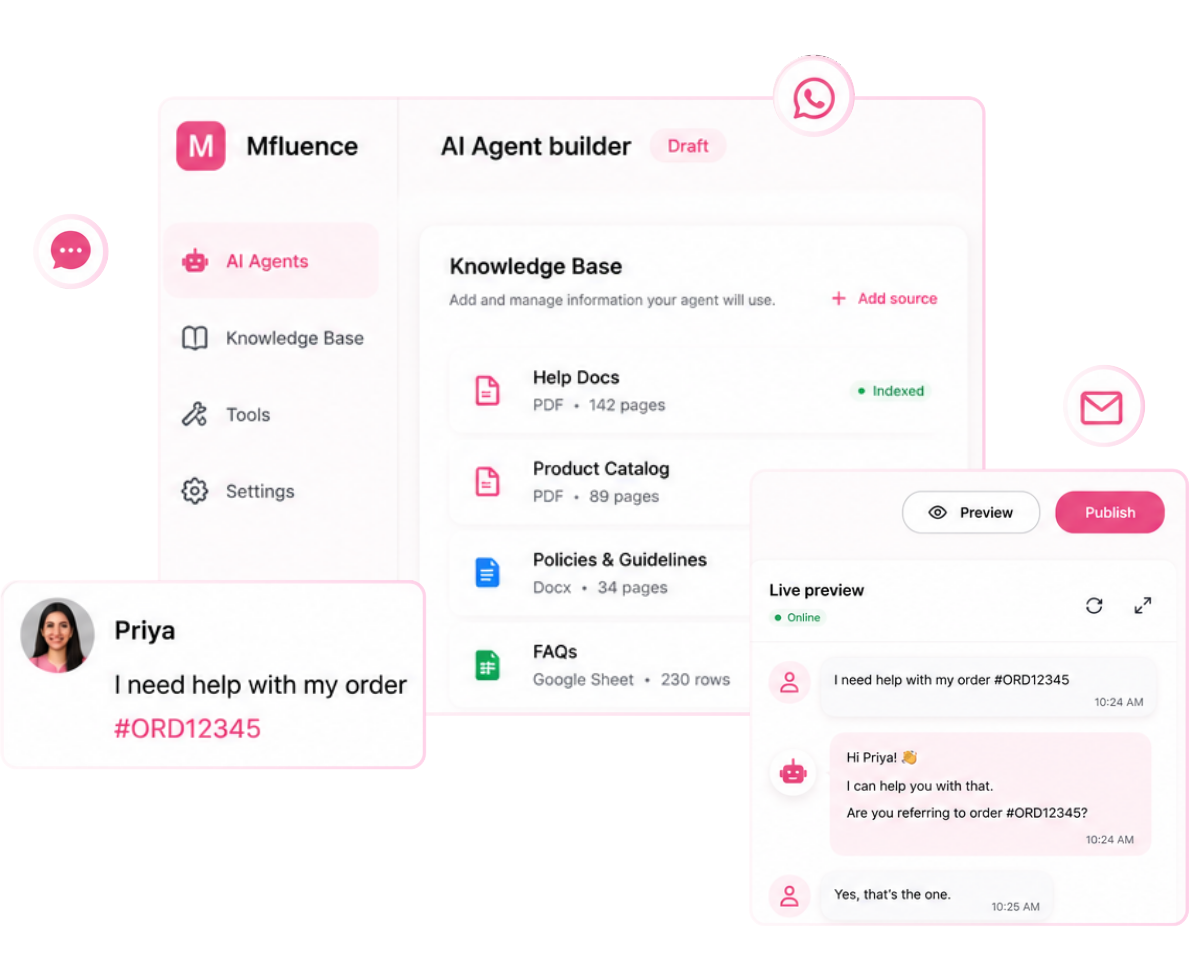
Point agents at your help docs, product catalog, and policies. They answer from your Knowledge Base — accurate, on-brand, and always up to date.
Takes real action
Agents don't just chat. With AI Tools they create leads, look up orders, check availability, and trigger workflows right inside the conversation.
Humans one tap away
When a conversation needs a person, the agent hands off with full context — and your team jumps in from the very same inbox.
The platform
Everything your AI agents — and your team — need
One place to capture, converse, and convert across every channel your customers actually use.
Omnichannel Team Inbox
One inbox for WhatsApp, web, SMS, email & voice. Your team and your AI agents answer every customer from the same place — no tab-switching, no dropped threads.
WhatsApp & Email Campaigns
Launch broadcasts in minutes with pre-approved templates, smart scheduling, and delivery + engagement reports that show what actually landed.
Leads & Sales CRM
Capture leads from every channel and move them across a visual pipeline. Segment your audience and route the hot ones to the right rep automatically.
Website Webchat & Chatbot
Turn website visitors into conversations. Drop in a live chat widget and a no-code AI chatbot that qualifies and books while you sleep.
Voice & IVR
Add a phone number, build an IVR in a drag-and-drop flow, and never lose a missed call — auto-reply and route callers to the right place.
AI on top of it all
Every channel and every record is an agent's playground. Switch AI on for a channel and it starts resolving, qualifying, and routing from day one.
Included on every plan
How it works
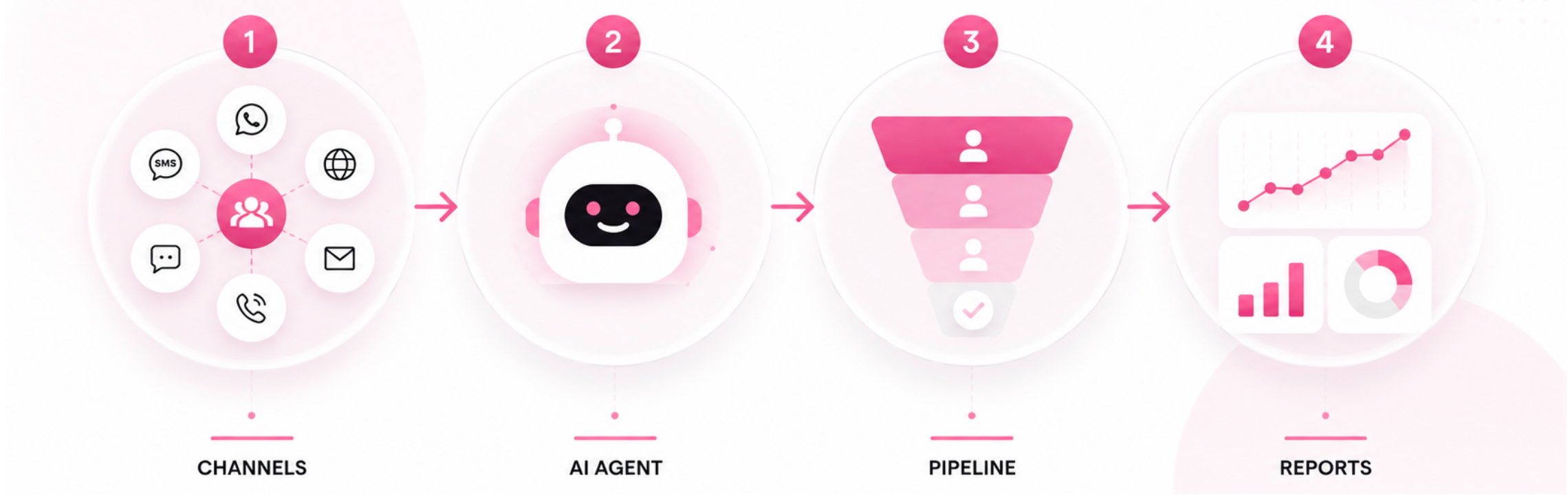
From connected to converting in four steps
No engineers required. Most teams are live in a day.
1
Connect your channels
Plug in WhatsApp, webchat, SMS, email, and voice in a few clicks.
2
Train your agent
Add your Knowledge Base and switch on the Tools your agent can use.
3
Let AI engage
Agents greet, answer, qualify, and route every conversation 24/7.
4
Convert & measure
Won conversations flow into your pipeline with reports on every channel.
And there's more
Extra firepower for teams that scale
Deeper capabilities — available when you need them.
B2B Prospecting
Find and reach the right accounts. Search people and organizations, build target lists, and launch multi-step outreach — all inside Mfluence.
Consent & List Hygiene
Keep your outreach clean and respectful. Built-in unsubscribe handling for email campaigns, plus email and mobile blacklist management, so you only reach people who want to hear from you — and protect your sender reputation.
Web Visitor Tracking
See who's on your site in real time. Turn anonymous visitor activity into timely, relevant conversations before they bounce.
Business Operations
Run the back office too — invoicing and payments, work orders, contracts, subscriptions, a follow-up calendar, email ticketing, and DocuSign e-signatures.
Integrations & Apps
Connect the tools you already use. Extend Mfluence with third-party apps and a full API to fit your existing stack.
Loved by teams
Real conversations, real outcomes
“
Our AI agent now handles 7 in 10 WhatsApp conversations before a human ever sees them — and our response time dropped from hours to seconds.
Priya Nair Head of Customer Experience, NovaRetail
“
We replaced four disconnected tools with Mfluence. One inbox, one AI, every channel — and onboarding took a single weekend.
Daniel Osei Founder, BrightLease
Pricing
Pricing that fits your business.
Every plan includes AI agents and all five channels. Talk to our team for a quote tailored to your volume.
Starter
For small teams getting started with AI + omnichannel.
Everything you need to know about Mfluence Agentic AI, grouped by topic.
Getting Started 3
What is Mfluence?
Mfluence is an AI-powered omnichannel CRM and customer engagement platform. It brings WhatsApp, web chat, email, SMS, voice, and your CRM into one place, so your team can capture, answer, and convert conversations without switching tools. On top of that unified inbox sits Mfluence Agentic AI, intelligent AI agents that handle routine conversations, take real actions in your systems, and pass anything complex to a human. The result is faster replies, shorter handling times, and a single view of every customer across channels. Businesses use Mfluence to run sales, support, and marketing conversations together, measure them in one dashboard, and scale customer engagement without adding headcount for every new channel or campaign.
How long does setup take?
Most teams are up and running quickly, often within a day for a first agent. Setup means connecting your channels like WhatsApp and web chat, adding your knowledge base, setting the agent's tone and rules, and choosing which tools and CRM actions it can use. There's no code to write and no model to train from scratch. You can start narrow, say a support agent that answers your top questions and books meetings, see it working, then expand its skills and add more agents. Guided setup and templates speed things up, and higher-tier plans include hands-on onboarding. The fastest path is to launch a focused agent on one channel, learn from real conversations, and grow from there rather than trying to automate everything on day one.
Do I need coding knowledge to use it?
No. Mfluence Agentic AI is built for business teams, not just developers. You configure agents through a visual setup: add knowledge, write plain-language instructions, toggle the tools and CRM actions an agent can use, and set escalation rules, all without writing code. Marketing, sales, and support managers can create and adjust agents themselves. That said, if you have developers and want deeper integrations, custom APIs and advanced connections are available, so technical teams can extend what agents do. This no-code-to-start, code-if-you-want approach means you're not blocked waiting on engineering to launch, and you can still scale into complex, custom setups later. Most customers get real value long before touching anything technical.
AI Agents 9
What is Agentic AI?
Agentic AI is AI that can act, not just answer. In Mfluence, Agentic AI is made up of AI agents that understand what a customer wants, reason through the request, and complete it using your connected tools and knowledge base. Instead of replying with a scripted message, an agent can look up an order, qualify a lead, create a CRM record, schedule a meeting, or trigger a workflow, then hand off to a person if needed. Think of each agent as a capable teammate that works around the clock across your channels. It follows your business rules, learns from your documents, and keeps a record of what it did, so you stay in control while routine work gets handled automatically.
Can AI Agents take actions, not just chat?
Yes, taking action is the whole point of Agentic AI. Mfluence agents connect to your tools and CRM, so within a single conversation they can create or update records, qualify a lead, fetch a customer's details, schedule a meeting, send a follow-up, or trigger a workflow in another system. Each action runs through permissions you define, so agents only do what you allow, and every step is logged for review. This means routine work like data entry, lookups, booking, and routing happens automatically while the conversation is still live, instead of landing in someone's to-do list afterward. Customers get things resolved in the moment, and your team is freed from repetitive back-office tasks to focus on higher-value work.
Can multiple AI Agents work together across departments?
Yes. Instead of one do-everything bot, Mfluence lets you run several specialized agents, for example a reception agent that greets and routes, a sales agent that qualifies leads, and a support agent that resolves issues. Each has its own knowledge, tools, and rules, so it's an expert in its area. Conversations move between agents and to humans as needed, carrying context along, so the customer never has to repeat themselves. This mirrors how real teams work and lets you deploy AI department by department, starting with support, then adding sales or a specific product line. Running focused agents also keeps answers sharper and easier to maintain than trying to cram every scenario into a single script.
Can the AI learn and improve over time?
Yes. Agents get better as your business feeds them better inputs. As real conversations happen, you can review them, spot questions the agent handled poorly or couldn't answer, and close those gaps by updating the knowledge base, adjusting instructions, or adding tools. Because answers are grounded in your content, improving the content immediately improves the AI, with no retraining project required. You can also refine escalation rules and tone based on what you see. Over time this creates a compounding loop: more coverage, fewer escalations, sharper answers. It's worth setting a light review rhythm early on, since the first weeks reveal the most valuable improvements. The AI doesn't drift on its own; you stay in control of how it evolves.
Can AI Agents understand multiple languages?
Yes. Agents understand and reply in multiple languages, so you can serve customers in the language they message in without staffing separate teams for each. A customer can ask in one language and get a natural, accurate reply, while your knowledge base and rules stay centrally managed. This is especially useful for businesses serving diverse or cross-border markets, or running WhatsApp campaigns across regions. The agent keeps the same capabilities, answering from your documents, taking actions, and escalating to humans, regardless of language. The benefit is broader reach and a more inclusive customer experience from a single setup, instead of maintaining parallel bots or turning away customers you can't currently support in their preferred language.
Can the AI work across all my channels?
Yes. Agentic AI is channel-agnostic within Mfluence, so the same agent capabilities work across WhatsApp, web chat, email, and more, and everything lands in one unified inbox. A customer who starts on the website and later messages on WhatsApp is recognized as the same contact, with history intact, so conversations feel continuous rather than disconnected. You manage knowledge, rules, and tools centrally, and they apply everywhere, with no rebuilding a separate bot per channel. This omnichannel approach is a core reason to run engagement on one platform: consistent answers, one view of the customer, and analytics across all channels together. Customers reach you where they prefer, and you still get a single, coherent operation behind the scenes.
Can the AI be customized to my brand and workflow?
Yes. Agents are configured to fit your business, not the other way around. You set the tone of voice so replies sound like your brand, load your knowledge so answers reflect your products and policies, and choose the tasks, tools, and CRM actions each agent can perform. You define escalation rules, working logic, and which agent handles which conversations. Because you can run multiple specialized agents, each can be tailored to a department or use case. As your processes change, you adjust the configuration and the behavior follows. This flexibility means the AI matches how you actually operate, in your language, your steps, and your rules, rather than forcing you into a generic template, which is what keeps the experience genuinely on-brand.
Can AI remember previous conversations and maintain context?
Yes. Agents keep context within a conversation, so customers don't have to repeat themselves as a chat progresses, and they can draw on the customer's history and CRM record for continuity across interactions. If someone returns days later, the agent can pick up with awareness of past activity rather than treating them as a stranger. This memory makes conversations feel coherent and personal instead of the short-memory experience of a basic bot that forgets the last message. Context also carries through handoffs to humans and between agents, so nothing gets lost when a conversation changes hands. You control what data agents use, so continuity is balanced with your privacy rules, remembering what's helpful within the boundaries you set.
Can AI perform multi-step reasoning and execute backend tasks autonomously?
Yes, this is the essence of agentic AI. Rather than mapping one message to one canned reply, an agent can break a request into steps, decide what's needed, and carry them out: understand the goal, look up data, take an action, check the result, and respond. If a customer asks to change an order, the agent can verify the account, check eligibility, perform the update in your backend system, and confirm, several steps in one conversation. These actions run under the permissions and rules you set, and each is logged, so autonomy stays accountable. You choose how much an agent can do on its own versus when it must confirm with a human. Multi-step reasoning is what lets agents resolve real requests end to end, not just answer questions.
Comparisons 3
How is Mfluence Agentic AI different from a traditional chatbot?
A traditional chatbot follows a fixed script: it matches keywords, shows pre-set replies, and gets stuck the moment a question falls outside its flow. Mfluence Agentic AI works differently. Its agents understand intent in natural language, reason about the best next step, and actually complete tasks, updating your CRM, booking a meeting, or pulling live customer data, rather than just talking. Because agents read from your knowledge base, their answers stay accurate and on-brand instead of generic. And when a request needs a human, the agent hands over with full context instead of a dead end. In short, a chatbot responds; an AI agent understands, decides, and gets things done, which means fewer frustrated customers and more resolved conversations.
How is Agentic AI different from ChatGPT or a general AI assistant?
General AI assistants are great at writing and answering broad questions, but they don't know your business, can't see your customer data, and can't take action inside your systems. Mfluence Agentic AI is built for operations. Each agent is grounded in your knowledge base, connected to your CRM and tools, and governed by your business rules, so it answers from your content and can create records, qualify leads, or trigger workflows on your behalf. It also runs where your customers are: WhatsApp, web chat, email, and more, with a clean handoff to human agents. So while a general assistant gives you information, an Mfluence agent gives you outcomes inside your own customer conversations, safely and with a full activity trail.
How is Agentic AI different from rule-based bots and live chat?
Rule-based bots depend on decision trees someone has to build and maintain; every new question means another branch, and customers hit walls fast. Live chat solves understanding by putting a person on every conversation, but it doesn't scale and it's limited to working hours. Mfluence Agentic AI sits in between and gives you the best of both. Agents understand free-form questions like a person, work around the clock like automation, and take real actions instead of just routing messages. They handle high-volume, repetitive conversations on their own and escalate the tricky ones to your team with full context. You get the scale of automation, the intelligence of a human, and a lower cost per conversation, without maintaining brittle rules.
Knowledge Base 3
Can AI Agents answer from my own documents and knowledge base?
Yes. You give agents access to your knowledge base, such as help articles, product docs, policies, and FAQs, and they answer from that content instead of guessing. This grounding keeps responses accurate, consistent, and on-brand, and it lets the AI handle detailed product or process questions a generic bot can't. When you update a document, the agent's answers update too, so customers always get current information. You can see which sources an answer drew from, which makes it easy to spot gaps and improve coverage over time. The practical payoff: your best answers, written once, are available instantly to every customer on every channel, around the clock, without a person re-explaining the same things all day.
Can I train the AI on my business?
Yes, and it's simpler than traditional training. You don't write code or label data, you add your knowledge: upload documents, point the agent at your help content, set the tone of voice, and define the tasks and tools it can use. From there the agent answers from your material and follows your instructions. As you review real conversations, you refine the knowledge base, adjust guardrails, and add examples, and the agent's behavior improves. You can also give different agents different knowledge and skills for sales, support, or specific products. The goal is an agent that sounds like your business and knows your processes, configured through a straightforward setup rather than a data-science project.
Can AI use our SOPs and follow business policies?
Yes. Your standard operating procedures, policies, and rules become part of what the agent follows. You can load SOPs into the knowledge base so agents answer and act according to your documented processes, and you can set guardrails that define what an agent may and may not do, for example when to offer a discount, what information to verify, or when a request must go to a human. Agents then apply those rules consistently on every conversation, which is hard to guarantee with a busy human team. If policies change, you update the source and the behavior follows. This keeps the AI aligned with how your business actually operates and gives managers confidence that customers are handled the right way every time.
CRM 1
Can AI Agents access and update my CRM?
Yes. Mfluence agents work directly with your CRM as part of the conversation. They can look up a contact, read past activity for context, create new leads or tickets, and update fields like status, notes, or deal stage, all automatically. Because the CRM is built into the same platform, there's no fragile syncing between tools; the customer record stays current the moment something changes in chat. You decide which objects and fields an agent can read or write, so access stays controlled and auditable. The benefit is a CRM that fills itself in: no more reps copying details from a conversation into a form, and no leads slipping through because someone forgot to log them.
Integrations 3
Can AI Agents use my business tools?
Yes. Mfluence agents use tools the way a trained employee would. You connect the tools an agent is allowed to use, such as CRM actions, knowledge lookups, scheduling, order or account systems, and custom APIs, and the agent decides which one to call based on what the customer needs. So if someone asks to reschedule, the agent uses your calendar tool; if they ask about an order, it fetches live data from your system. Every tool runs under permissions you set, and calls are logged. This tool-using ability is what separates an agent from a chatbot: instead of guessing or deflecting, it reaches into the right system, completes the task, and reports back, all inside the same conversation.
Can AI integrate with APIs and custom systems?
Yes. Beyond built-in CRM and channel actions, Mfluence agents can connect to your own systems through APIs, so they can read and write data wherever it lives, including order management, billing, booking, and internal databases. You expose the actions an agent is allowed to perform, and it calls them when a conversation requires it, passing the results back to the customer in real time. This is what lets an agent do things specific to your business, not just generic replies. Access is scoped and logged, so custom integrations stay controlled. If you have a system with an API, an agent can usually be taught to use it, turning your existing tools into things customers can trigger simply by asking in chat.
Can AI integrate with my ERP and CRM systems?
Yes. Mfluence includes its own CRM, and agents can also connect to external CRM, ERP, and business systems through integrations and APIs. That means an agent can pull a customer's account or order status from your ERP, update a record in your CRM, or check inventory before answering, using live data instead of static replies. You control which systems and fields an agent can access, and every action is logged. Connecting these back-office systems is what makes AI genuinely useful for operations: customers get accurate, up-to-the-minute answers, and your records stay in sync automatically. Whether you standardize on Mfluence CRM or keep existing systems, agents can work with the data you already have rather than forcing a rip-and-replace.
Automation 4
Can AI book meetings and appointments?
Yes. When a customer or lead wants to talk, the agent can check availability and schedule the meeting during the conversation, then confirm it and add it to the CRM, with no back-and-forth emails. You connect your scheduling and calendar tools, set the rules for who books what and when, and the agent handles the rest across whichever channel the customer is on. It can also send reminders and follow-ups to reduce no-shows. This turns interest into booked time immediately, while the customer is still engaged, instead of losing momentum to a delayed link. For sales teams especially, more booked meetings from the same traffic is a direct, measurable win.
Can AI automate workflows?
Yes. Agents can trigger and run workflows as part of a conversation: routing a request, opening a ticket, sending a follow-up sequence, updating records, or kicking off an internal process when certain conditions are met. Instead of a person noticing a message and manually starting the next step, the agent recognizes intent and sets the workflow in motion immediately. You define the workflows and the conditions, and the agent executes them consistently. This turns conversations into completed processes: a lead comes in and is qualified, logged, and assigned; a support request is captured, categorized, and escalated if needed. Automating these steps cuts delays and dropped handoffs, and keeps work moving even outside business hours.
Can AI send follow-up messages?
Yes. Agents can send timely follow-ups so conversations don't go cold: a reminder about an unfinished signup, a nudge to a lead who went quiet, an appointment reminder, or a check-in after a support issue. Follow-ups can be triggered by rules or by what happened in the conversation, and they go out on the channel the customer prefers, like WhatsApp or email. Because the agent has context, the message is relevant rather than generic spam, and customers can reply and continue the conversation naturally. Consistent, well-timed follow-up is something busy teams often miss, and it's frequently where revenue leaks. Letting agents handle it means fewer forgotten leads and more conversations that actually reach a resolution or a sale.
Can AI automate entire customer journeys?
Yes. Because agents can converse, take actions, and trigger workflows across channels, they can orchestrate whole journeys rather than isolated replies: greet and qualify a new lead, answer questions, book a demo, follow up, and hand a warm, well-documented opportunity to sales, then support the customer after they buy. Each stage updates the CRM and can trigger the next step automatically, so prospects and customers move forward without falling through cracks between tools or teams. You design the journey and the rules; the agents execute it consistently, day and night. This end-to-end view is where Agentic AI compounds: instead of automating one task, you automate the connective tissue of acquisition, conversion, and retention across every channel your customers use.
Human Handoff 3
Can AI hand conversations over to human agents?
Yes, and clean handoff is a core part of the design. An agent handles what it can, but when a conversation needs a person, such as a sensitive issue, an edge case, or a customer who simply asks for one, it escalates to your team and brings the full history and context with it. The human sees what the customer wanted and what the agent already did, so they pick up instantly instead of starting over. You set the rules for when to escalate, whether by topic, sentiment, value, or explicit request. This blend keeps automation from feeling like a wall: customers get fast answers for routine questions and a real person exactly when it matters, all inside the same inbox.
When should a human step in?
Humans should step in when judgment, empathy, or authority matters more than speed: sensitive complaints, high-value deals, unusual requests, or anything outside the agent's approved scope. Mfluence lets you define these triggers: escalate on certain topics, negative sentiment, repeated confusion, specific customer tiers, or a direct request to talk to someone. The agent handles the routine majority and routes the rest, so your team spends time only where they add the most value. Because the handoff carries full context, the customer doesn't feel bounced around. A good rule of thumb: let AI own high-volume, well-documented questions and clear tasks, and reserve people for exceptions, relationships, and decisions. You can tune these lines over time as you see how conversations actually go.
Will AI replace my human agents?
No, the goal is to amplify your team, not remove it. Agents take over repetitive, high-volume, well-documented work so your people spend time on complex issues, relationships, and decisions where humans excel. Anything sensitive or ambiguous is escalated with full context, so people stay firmly in the loop. In practice, teams use AI to handle the first line and the routine majority, which reduces burnout from repetitive tickets and lets the same team support far more customers. Human judgment, empathy, and accountability remain essential, and Mfluence is designed around that partnership rather than a full replacement. The realistic outcome is a smaller ratio of agents to customers and a better job for the agents you have, not an empty support desk.
WhatsApp 1
Can AI Agents work on WhatsApp?
Yes. WhatsApp is one of Mfluence's core channels, and Agentic AI works natively there. An agent can answer questions, qualify leads, fetch order or account details, book appointments, and update your CRM directly inside a WhatsApp chat, then hand off to a human when needed. Because so many customers prefer messaging, putting a capable agent on WhatsApp means instant replies at any hour instead of missed messages and slow follow-ups. Conversations stay unified with your other channels in one inbox, so a customer who starts on WhatsApp and later emails is still the same known contact. For businesses in messaging-first markets, WhatsApp automation with real actions, not just auto-replies, is often the single biggest engagement upgrade.
Use Cases 4
Can AI qualify leads?
Yes, lead qualification is one of the highest-return uses. An Mfluence sales agent can greet an inbound lead, ask your qualifying questions, capture the answers, score or tag the lead, and create or update the record in your CRM automatically. Because it works around the clock across WhatsApp, web chat, and email, leads get engaged the moment they arrive instead of waiting for business hours, when interest is highest. Qualified, sales-ready leads can be routed straight to the right rep with the conversation and context attached, while early-stage ones are nurtured with follow-ups. The result is faster response, consistent qualification on every lead, and a sales team that spends its time on prospects who are actually ready to talk.
Can AI answer product questions?
Yes, and this is where grounding really pays off. When you connect your product docs, specs, pricing rules, and FAQs to the knowledge base, agents answer detailed product questions accurately and consistently, covering sizes, compatibility, features, availability, and policies, instead of the vague replies a scripted bot gives. Customers get reliable information instantly, at any hour, on any channel, which shortens the path from question to purchase. If a product question overlaps with an action, the agent can go further: check stock, create a quote, or book a demo. Keeping product answers in one maintained knowledge source also means updates reach every channel at once, so customers aren't told different things in chat, email, and WhatsApp.
Can AI handle customer support?
Yes. Support is a core use case. Agents resolve the common, well-documented questions that make up most of the support load, such as order status, how-tos, account help, and policies, by answering from your knowledge base and taking actions like looking up details or opening a ticket. They work around the clock across channels, so customers get help immediately instead of waiting in a queue. Anything sensitive or unusual is escalated to a human with full context, so quality doesn't suffer. This mix typically cuts response times and handling costs while raising first-contact resolution. Your support team shifts from repetitive triage to the cases that genuinely need a person, which tends to improve both customer satisfaction and agent morale.
Can AI support my sales team?
Yes. Agents act as an always-on first line for sales: they engage inbound leads instantly, ask qualifying questions, answer product and pricing questions, book meetings, and log everything to the CRM. Reps then step in on qualified, well-prepped opportunities instead of chasing cold or unready leads. Because agents respond in seconds at any hour and across WhatsApp, web chat, and email, fewer leads slip away to slow follow-up, and speed-to-lead is one of the biggest drivers of conversion. Agents can also nurture quiet leads with timely follow-ups. The net effect is more qualified pipeline from the same traffic and a sales team focused on closing rather than data entry and first-touch triage.
Performance 5
Can the AI work 24/7?
Yes. AI agents don't keep office hours, they respond instantly, day or night, weekends and holidays included. That matters because customers increasingly expect immediate answers, and a reply in seconds at 2 a.m. can be the difference between a won and lost lead. Agents handle routine questions, capture and qualify leads, and complete tasks around the clock, then queue anything that needs a person for your team's next working hour, with full context ready. You get continuous coverage across channels without paying for overnight staffing or outsourced shifts. It also smooths out spikes: whether ten or ten thousand people message at once, every one gets an immediate first response instead of sitting in a queue.
How accurate are the AI's responses?
Accuracy comes from grounding. Because Mfluence agents answer from your approved knowledge base rather than guessing, responses stay factual, consistent, and on-brand, and you can see which source an answer used. When an agent isn't confident or a question falls outside its knowledge, it's designed to ask a clarifying question or hand off to a human instead of inventing an answer. You improve accuracy directly by improving your content and guardrails, and by reviewing real conversations. In practice, well-configured agents handle the large share of routine, documented questions reliably, while people focus on the ambiguous minority. No AI is perfect, which is exactly why grounding, guardrails, and human handoff are built in, so the system stays trustworthy even when a question is hard.
Can AI reduce response times?
Yes, this is usually the first and most visible benefit. Agents reply in seconds, at any hour, no matter how many people message at once, so customers aren't left waiting for the next available human. Instant first responses matter both for support satisfaction and for sales conversion, where the fastest reply often wins. Even when a conversation ultimately needs a person, the agent answers immediately, gathers details, and hands over a ready-to-act summary, so the human resolves it faster too. Removing queue time across channels tends to lift satisfaction and reduce abandoned conversations. Because the AI absorbs routine volume, your team's response times on the cases they do handle typically improve as well.
Can AI improve customer satisfaction?
Yes, when it's set up thoughtfully. Customers value fast, accurate, around-the-clock answers, and a smooth path to a human when they need one, which is exactly what Agentic AI delivers. Instant replies remove waiting, grounded answers reduce wrong information, and context-carrying handoffs mean customers don't repeat themselves. Sentiment-aware escalation keeps frustrated customers from being trapped with automation. Consistency helps too: every customer gets your best answer, not a variable one depending on who's online. The key is using AI for what it's good at and handing off gracefully for the rest, which Mfluence is designed to do. Teams that get this balance right typically see higher satisfaction alongside lower cost, because the experience improves and the busywork disappears.
Can AI handle high conversation volumes?
Yes, scaling is where AI clearly beats staffing alone. Agents respond to many conversations at once without queues or overtime, so a sudden spike from a campaign, launch, or seasonal rush gets the same instant first response as a quiet Tuesday. There's no need to over-hire for peaks or leave customers waiting during them. The AI absorbs the routine bulk and escalates only what needs a person, so your team stays focused even under load. This elasticity makes engagement costs far more predictable as you grow: more volume doesn't automatically mean proportionally more headcount. For businesses running high-traffic WhatsApp or web campaigns, being able to handle everyone at once, immediately, is often the difference between capturing demand and losing it.
Analytics 3
Can AI summarize conversations?
Yes. Agents can produce concise summaries of a conversation: what the customer wanted, what was done, and what's outstanding. This is useful at handoff, so a human agent reads a short recap instead of scrolling the whole thread, and afterward, so managers can review outcomes quickly. Summaries also feed cleaner CRM notes automatically, keeping records useful without manual write-ups. For busy teams handling lots of chats, this saves real time and reduces the detail that gets lost between shifts or departments. Because the summary is generated from the actual conversation, it stays accurate to what happened. It's a small feature that quietly improves handoffs, reporting, and record-keeping across every conversation the AI touches.
Can AI generate reports and analytics?
Yes. Mfluence gives you analytics across your conversations and channels: volumes, response and resolution times, how many chats the AI handled versus escalated, lead and conversion outcomes, and more. This shows the concrete impact of automation, including faster replies, deflected routine questions, and where customers still get stuck. You can use these insights to improve your knowledge base, adjust agents, and staff your team where it matters. Because AI and human conversations live in one platform, reporting covers the whole picture rather than a siloed bot dashboard. Seeing what customers ask most also guides product, content, and marketing decisions. The goal is not just automation, but visibility, so you can prove ROI and keep improving with data instead of guesswork.
Can AI detect customer sentiment?
Yes. Agents can read the tone of a conversation and factor it into what they do, for example escalating to a human when a customer sounds frustrated, or flagging unhappy interactions for follow-up. Sentiment signals also enrich your analytics, so you can spot patterns like which topics upset customers or where satisfaction dips. This helps you fix root causes, not just individual chats. Used well, sentiment awareness makes automation feel more human: instead of a bot cheerfully mishandling an angry customer, the agent recognizes the mood and routes appropriately. It's a safeguard that protects customer experience while the AI handles volume, and a source of insight your team can act on beyond any single conversation.
Security 1
How secure is my data with Mfluence Agentic AI?
Security is built into how Mfluence works. Data is encrypted in transit and at rest, access is controlled with role-based permissions, and every agent action runs under scoped, per-conversation permissions so it can only touch what you allow. Actions are logged, giving you a clear audit trail of what the AI did and why. Your knowledge base and customer conversations belong to you; Mfluence does not use your private data to train shared models. Enterprise plans add single sign-on and detailed audit logs for tighter governance. Because customer data stays within your controlled workspace rather than being pasted into a public tool, you get the benefits of AI without giving up oversight of where sensitive information goes.
Data Privacy 1
How does Mfluence protect data privacy?
Mfluence treats customer data as yours, not ours. Conversations, contacts, and knowledge you add stay inside your workspace, protected by encryption and role-based access, and are not used to train shared or public AI models. You control what each agent can access and which tools it can use, and you can restrict or remove data as needed. Activity logs show exactly what information an agent read or updated, which supports internal reviews and compliance requirements. For regulated teams, features like consent handling, unsubscribe management, and access controls help you meet privacy obligations. The principle is simple: AI should make customer engagement faster without loosening your grip on privacy, so we keep data contained, controlled, and transparent.
Pricing 1
How much does Mfluence Agentic AI cost, and is there a trial?
Mfluence offers tiered pricing, and Agentic AI capabilities are part of the plans rather than an unpredictable per-message bolt-on. You can start with a free trial to test agents on your own channels and knowledge before committing, and choose a plan as your usage grows, with self-serve options for smaller teams and custom Enterprise pricing for larger, higher-volume, or more governed deployments. Because the AI deflects routine work and speeds up conversions, most teams weigh the cost against saved agent time and captured leads rather than as a standalone expense. For exact, current pricing and what's included at each tier, see the pricing page or talk to the team about a plan matched to your volume and channels.
Put your AI agents to work this week.
Talk to our team, or see Mfluence in action with a live demo.




 Priya Nair
 Daniel Osei